
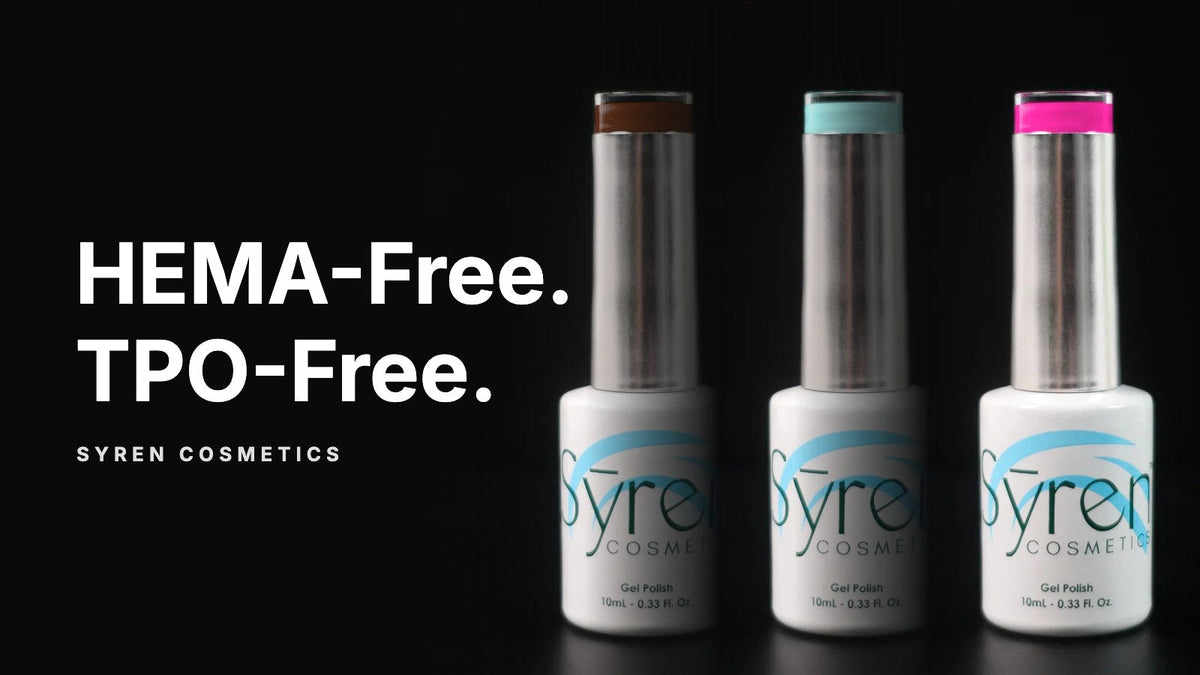
If you have been in the nail industry for more than a year, you have probably heard a client ask, “Is this HEMA-free?” Five years ago that question was rare. Today it comes up at reception desks across the country, and it is worth being able to answer it well.
This post covers what HEMA is, why it ended up in almost every gel product on the market, what the allergy risk actually looks like, and what it means when a brand says its formula is HEMA-free.
HEMA, Defined
HEMA is short for 2-hydroxyethyl methacrylate. It is a monomer, one of the small liquid building blocks that link together into a solid polymer when gel cures under a lamp. It is also one of the most effective adhesion promoters chemists have ever put in a nail product, which is why it became the default ingredient in gel polish, builder gels, gel extensions, and many base coats.
HEMA earned its place on performance. It helps product grip the natural nail, it improves flexibility, and it keeps formulas wetting out smoothly during application. For a long time, nobody had a reason to question it.
The Problem Is the Size of the Molecule
The thing that makes HEMA such a good bonding agent is the same thing that makes it a problem. The HEMA molecule is small and highly reactive. When uncured gel touches skin, a molecule that small can pass through the outer skin barrier before the product has a chance to cure.
Once it gets through, the immune system can learn to recognize it as a threat. That process is called sensitization, and it does not happen on the first exposure. It builds up over repeated contact, which is exactly the pattern a working nail tech experiences: a little flooding at the cuticle here, a smear on the finger there, a few times a day, for years.
Many newer formulas use larger-molecule acrylates that do the same adhesion job but are less able to penetrate the skin, or they leave HEMA out entirely.
What HEMA Sensitivity Looks Like
Reactions to uncured HEMA usually show up on the skin around the nail rather than on the nail itself:
- Redness at the sidewalls and cuticle area
- Itching, stinging, or a burning feeling after application
- Swelling of the fingertip or nail fold
- Dry, cracked, or peeling skin around the nail
- In techs, dermatitis on the fingers that hold the brush or the hand that steadies the client
The part that matters most: once an acrylate allergy develops, it is generally considered permanent. There is no desensitization treatment. A sensitized person may also react to other products in the same chemical family, including some dental bonding materials and medical adhesives. For a nail tech, that can mean the end of a career. For a client, it can mean the end of gel manicures.
Why Techs Are Paying Attention Now
The shift toward HEMA-free is being driven from three directions at once.
Nail techs are the group with the highest exposure, and more of them are hearing about colleagues who developed reactions after years of trouble-free work. Clients are reading mainstream coverage of the European gel ingredient ban and arriving with questions. And formulation science has caught up: it is now possible to build a gel polish with the pigment load, self-leveling, and wear time professionals expect without relying on HEMA to get there.
What HEMA-Free Actually Means
A HEMA-free gel replaces HEMA with other monomers and oligomers that provide adhesion through different chemistry. It does not mean the product is free of acrylates entirely, and it does not mean you can skip good technique. Any uncured gel on skin is a sensitization risk, so clean application, no flooding, and a full cure still matter with every formula.
What it does mean is that the single ingredient most strongly linked to acrylate allergy in nail techs is no longer part of the product.
Where Syren Cosmetics Stands
Syren Cosmetics formulates its gel polish in-house in Wilmington, North Carolina, without HEMA and without TPO. Because we develop our own formulas rather than relabeling a supplier’s stock product, we control which monomers go in and which stay out. Our goal is a gel that delivers professional pigmentation, smooth self-leveling, and long wear while removing the ingredient most closely tied to sensitization in working techs.
The Bottom Line
HEMA is not a scary ingredient in a properly cured nail. The risk lives in uncured product on skin, and the people with the most exposure are the professionals holding the brush. Knowing what HEMA is, why it matters, and where your products stand lets you answer client questions with confidence and make an informed decision about your own long-term health in this industry.
Written by the Syren Cosmetics team. Syren Cosmetics is a professional nail brand based in Wilmington, NC. This article is for educational purposes and is not medical advice. If you are experiencing skin reactions to nail products, consult a dermatologist.